
Supply Chain Actors in High-Risk Areas
Product Suite + Rebrand • Established PMF

Supply Chain Actors in High-Risk Areas
Product Suite + Rebrand • Established PMF
Index
Index
The initial state of things
The initial state of things
Datastake started out as a framework by BetterChain to support their client projects, but the team saw opportunities to grow beyond that. They partnered with CodeVider to build a solution that could address more broadly the information gaps between local and international stakeholders in high-risk areas. The starting focus were mining operators, international traders, smelters and refiners working in the mineral supply chain focused small and large scale gold mining.
Datastake started out as a framework by BetterChain to support their client projects, but the team saw opportunities to grow beyond that. They partnered with CodeVider to build a solution that could address more broadly the information gaps between local and international stakeholders in high-risk areas. The starting focus were mining operators, international traders, smelters and refiners working in the mineral supply chain focused small and large scale gold mining.
The team had chosen ANT Design, which comes with a React UI library, for their interface design and I needed to work & ideate within this framework due to the existing infrastructure. If we were to create components not documented within the library, they still had to match the system's visual language of ANT.
The team had chosen ANT Design, which comes with a React UI library, for their interface design and I needed to work & ideate within this framework due to the existing infrastructure. If we were to create components not documented within the library, they still had to match the system's visual language of ANT.
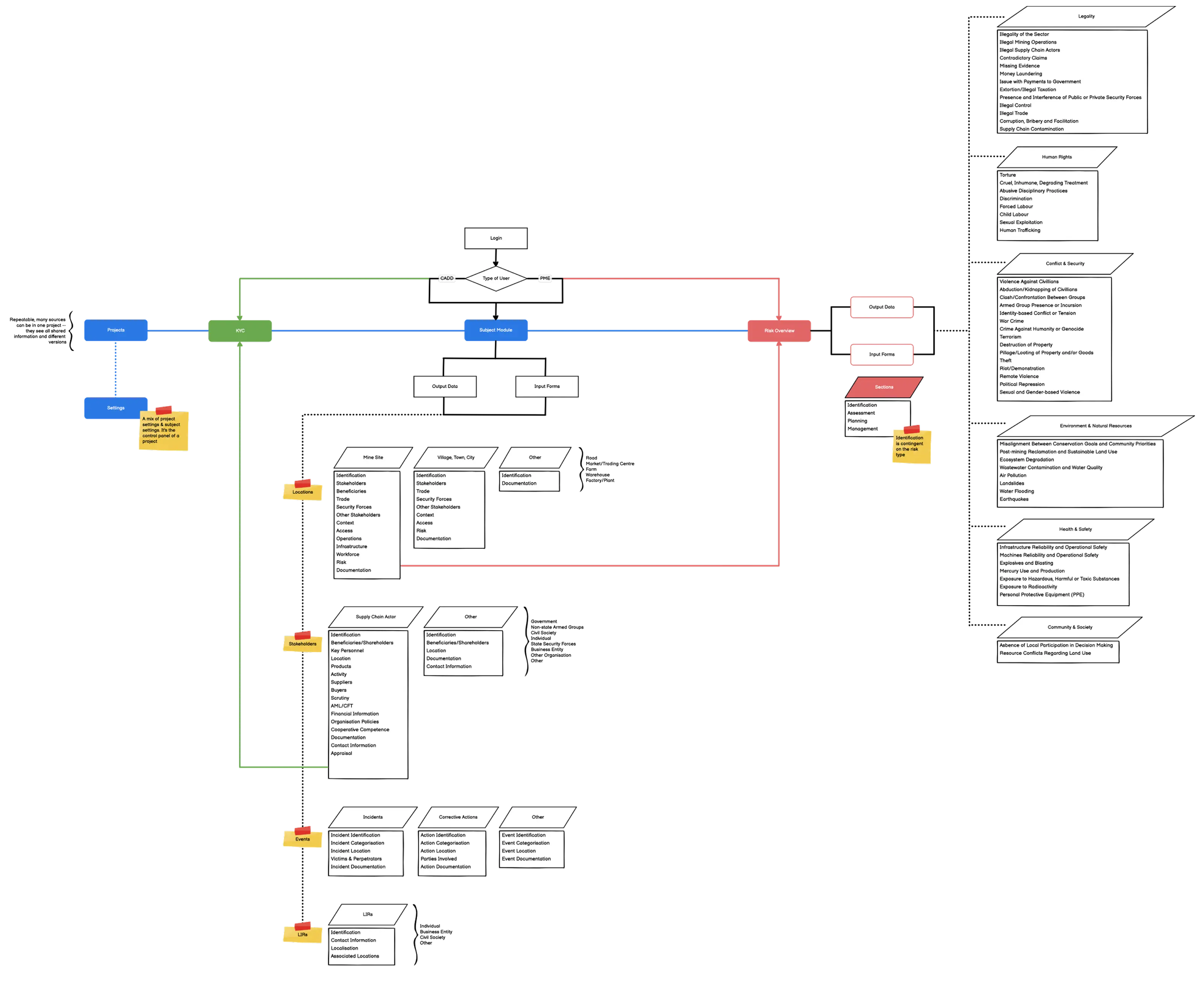
Datastake's initial information architecture mapped across two web apps PME & CADD
Datastake's initial information architecture mapped across two web apps PME & CADD
Datastake's initial information architecture mapped across two web apps PME & CADD
Datastake consisted of two apps; Project Monitoring & Evaluation (PME) focused on NGOs monitoring humanitarian risk in these areas and Consolidated Autonomous Due Diligence (CADD) which dealt with information on local and international supply chain actors.
Datastake consisted of two apps; Project Monitoring & Evaluation (PME) focused on NGOs monitoring humanitarian risk in these areas and Consolidated Autonomous Due Diligence (CADD) which dealt with information on local and international supply chain actors.
The main entities were locations, stakeholders & event data whose output was organised in tables and input was collected through forms. All this information was shared with other relevant parties through projects. Each party had a "ledger" of their own data and other parties' data, creating an almost immutable history between them.
The main entities were locations, stakeholders & event data whose output was organised in tables and input was collected through forms. All this information was shared with other relevant parties through projects. Each party had a "ledger" of their own data and other parties' data, creating an almost immutable history between them.
Local actors in high-risk areas
Local actors in high-risk areas
Global multi-stakeholder initiatives have set expectations and requirements on risk, impact and due diligence. However, these standards typically struggle for alignment, involve costly monitoring, evaluation and audit, and undervalue community feedback.
Global multi-stakeholder initiatives have set expectations and requirements on risk, impact and due diligence. However, these standards typically struggle for alignment, involve costly monitoring, evaluation and audit, and undervalue community feedback.
Datastake saw an opportunity to source massive amounts of unstructured data held by individuals, local businesses, civil society, development programs, and international experts usually ignored since there is no common reporting model.
Datastake saw an opportunity to source massive amounts of unstructured data held by individuals, local businesses, civil society, development programs, and international experts usually ignored since there is no common reporting model.
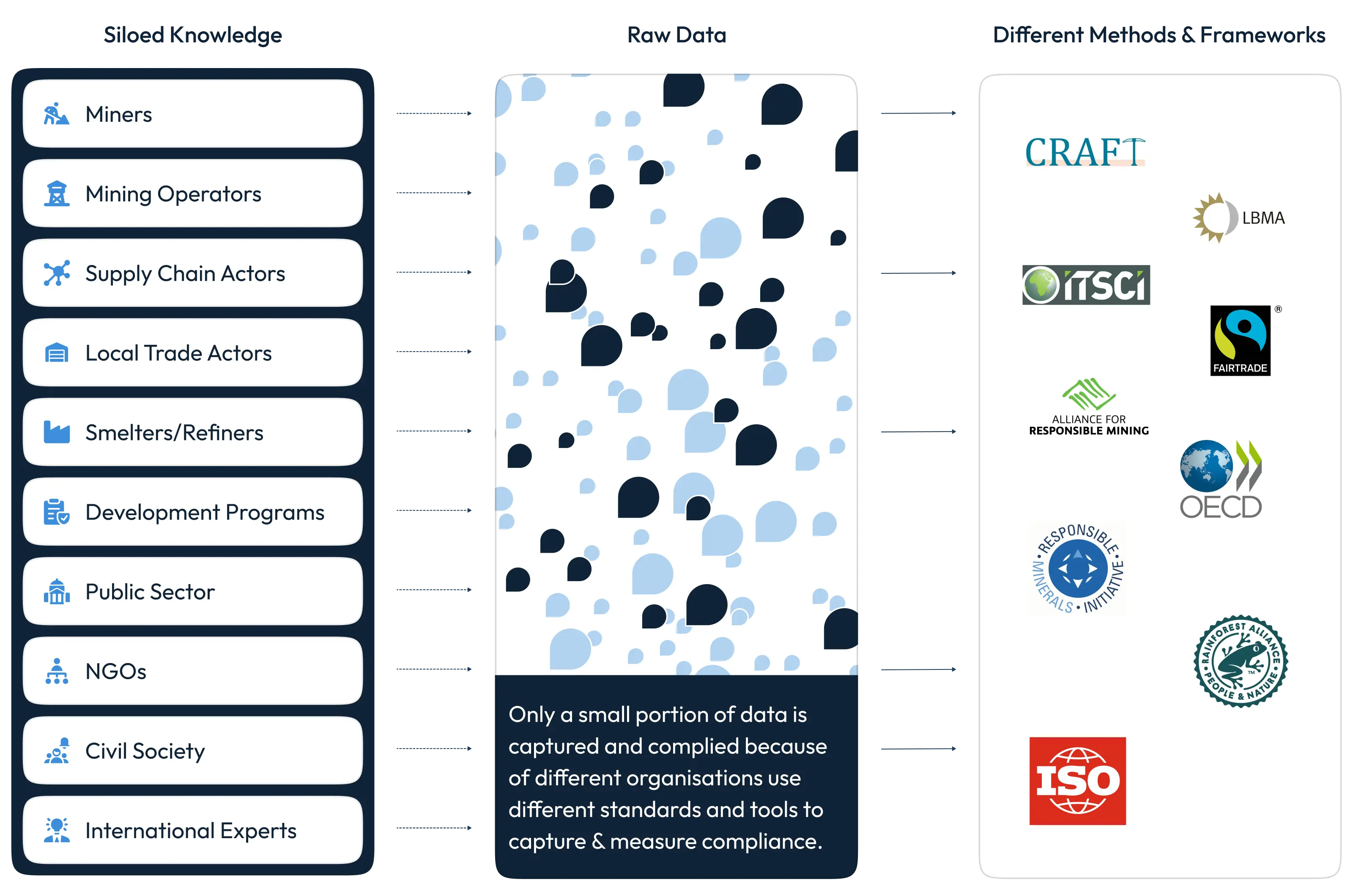
The data landscape for compliance
The data landscape for compliance
The data landscape for compliance
Evaluating risk in low-governance, multi-stakeholder areas
Evaluating risk in low-governance, multi-stakeholder areas
The location risk methodology was developed in collaborations with the UK Foreign Commonwealth & Development Office (UK FCDO), US Agency for International Development and Alliance for Responsible Mining. It provided an empowering framework for all local information holders to collaborate in the risk management process.
The location risk methodology was developed in collaborations with the UK Foreign Commonwealth & Development Office (UK FCDO), US Agency for International Development and Alliance for Responsible Mining. It provided an empowering framework for all local information holders to collaborate in the risk management process.
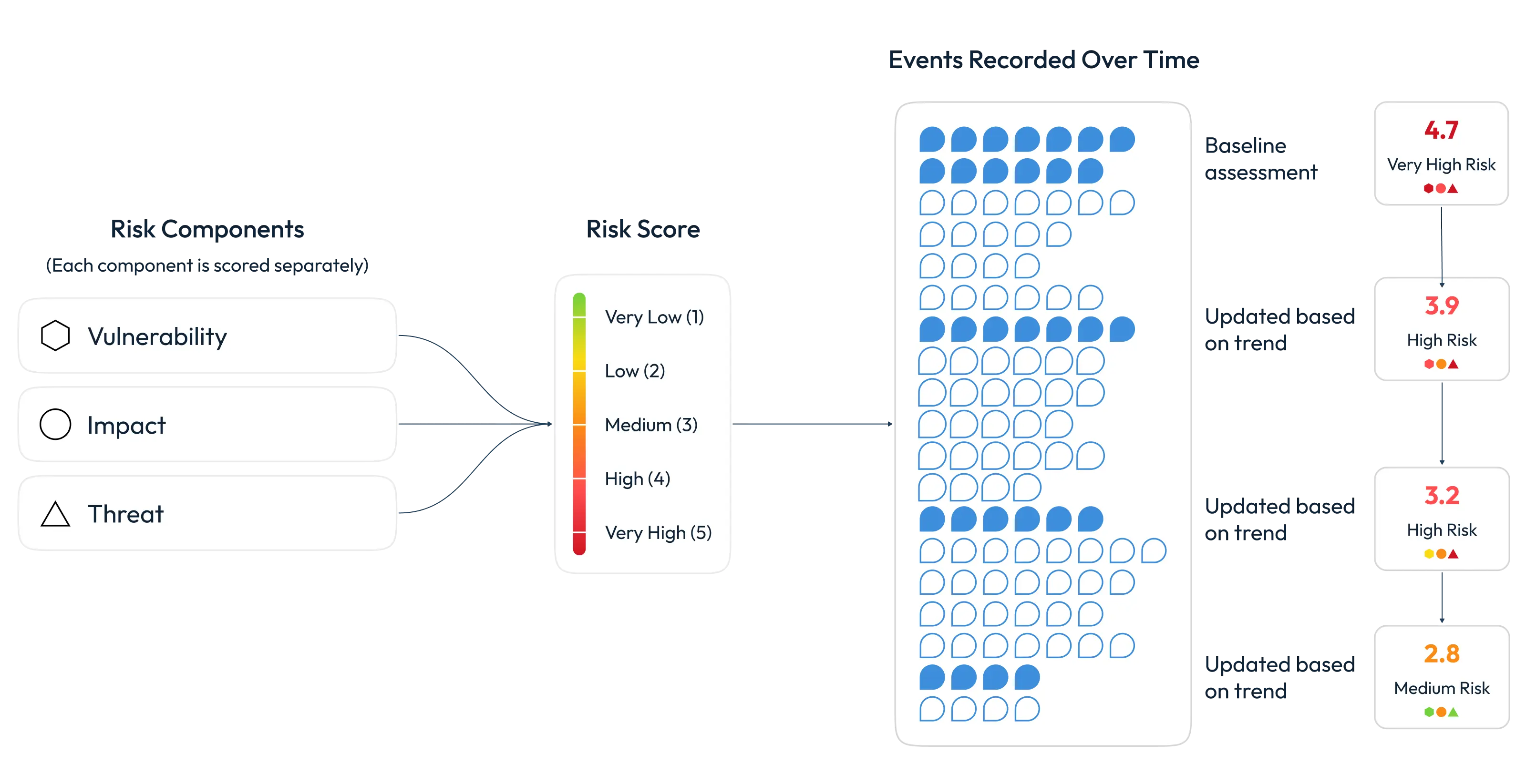
Overview of the risk evaluation methodology
Overview of the risk evaluation methodology
Overview of the risk evaluation methodology
The short-term objective of risk is a reduction in the vulnerability component of the risk score. The medium-term objective is a trend change in the number and/or severity of incidents, to be reflected in the threat and impact components. The vulnerability component of risk may also be re-assessed as part of follow-up assessment.
The short-term objective of risk is a reduction in the vulnerability component of the risk score. The medium-term objective is a trend change in the number and/or severity of incidents, to be reflected in the threat and impact components. The vulnerability component of risk may also be re-assessed as part of follow-up assessment.
First, based on the available inputs and mounting client feedback, I built the dashboard and the risk module to monitor and evaluate risk in different locations.
First, based on the available inputs and mounting client feedback, I built the dashboard and the risk module to monitor and evaluate risk in different locations.
DEMO
DEMO
DEMO
PME dashboard and risk module interface
PME dashboard and risk module interface
PME dashboard and risk module interface
Then I built one for projects where parties could view information from sources among in-country businesses, civil society actors, or individuals all registered in Datastake's system who underwent a KYC process & due diligence report.
Then I built one for projects where parties could view information from sources among in-country businesses, civil society actors, or individuals all registered in Datastake's system who underwent a KYC process & due diligence report.
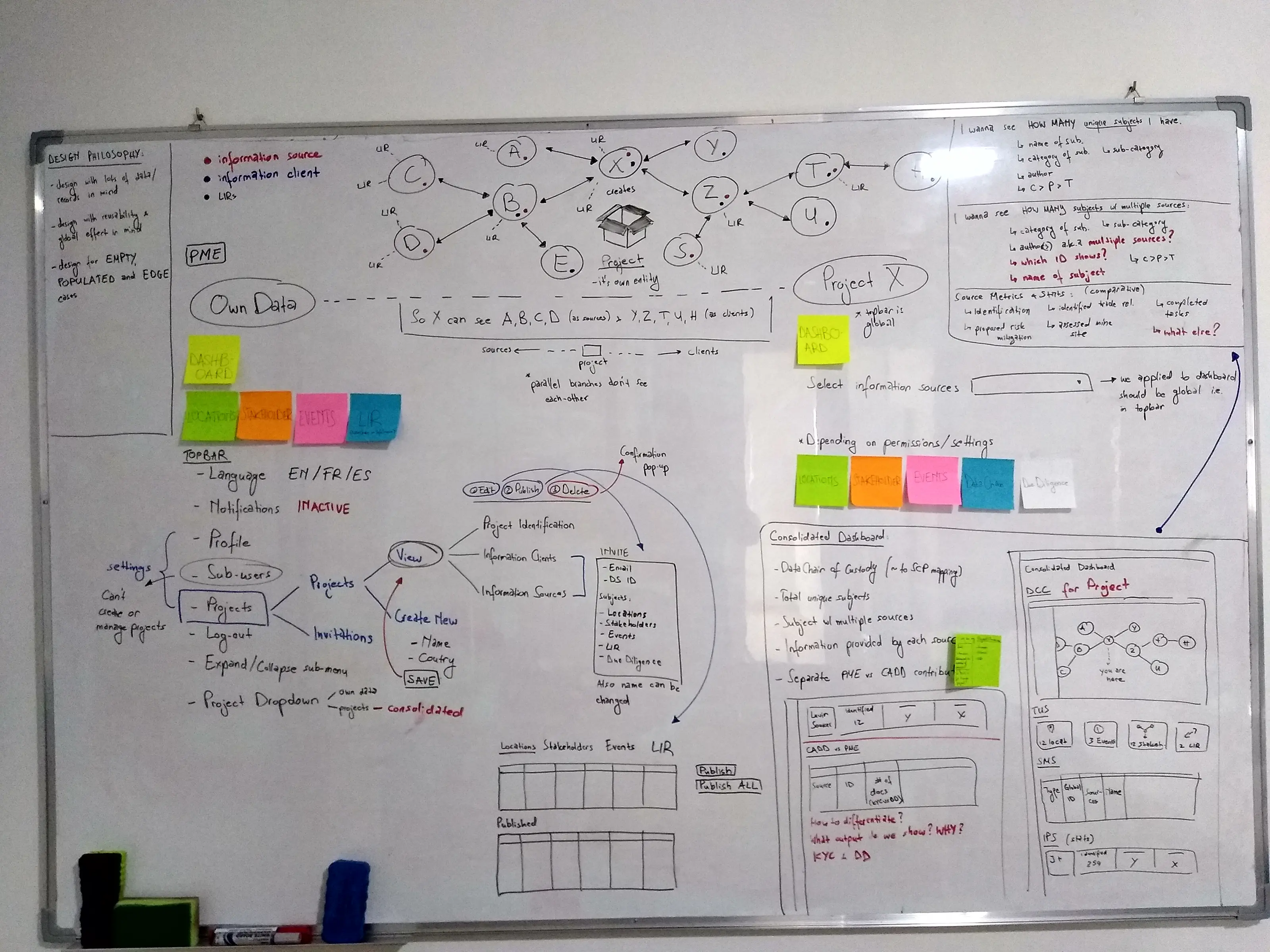
Breakdown of project logic
Breakdown of project logic
Breakdown of project logic
DEMO
DEMO
DEMO
Project dashboard interface
Project dashboard interface
Project dashboard interface
Client reception on the modules was positive. The analysis compiled helped assist ongoing projects for clients such as Levin Sources, Justice Plus & Global Communities, Initiative des Femmes Entrepreneurs pour le Développement Durable (IFEED) and others involved in the Democratic Republic of Congo region, monitoring humanitarian risks and supply chain actor integrity in the gold mining process.
Client reception on the modules was positive. The analysis compiled helped assist ongoing projects for clients such as Levin Sources, Justice Plus & Global Communities, Initiative des Femmes Entrepreneurs pour le Développement Durable (IFEED) and others involved in the Democratic Republic of Congo region, monitoring humanitarian risks and supply chain actor integrity in the gold mining process.
Evaluating supply chain actor compliance
Evaluating supply chain actor compliance
Monitoring a supply chain actor requires KYC and due diligence data. Each actor compiles their own information. To ensure transparency, any other actor who has interacted with this initial actor can provide information to verify, contradict or complete their KYC and due diligence.
Monitoring a supply chain actor requires KYC and due diligence data. Each actor compiles their own information. To ensure transparency, any other actor who has interacted with this initial actor can provide information to verify, contradict or complete their KYC and due diligence.
The goal is for upstream supply chain operators and other stakeholders to report information on the local context of mining and mineral trade in compliance with the OECD Due Diligence Guidance.
The goal is for upstream supply chain operators and other stakeholders to report information on the local context of mining and mineral trade in compliance with the OECD Due Diligence Guidance.
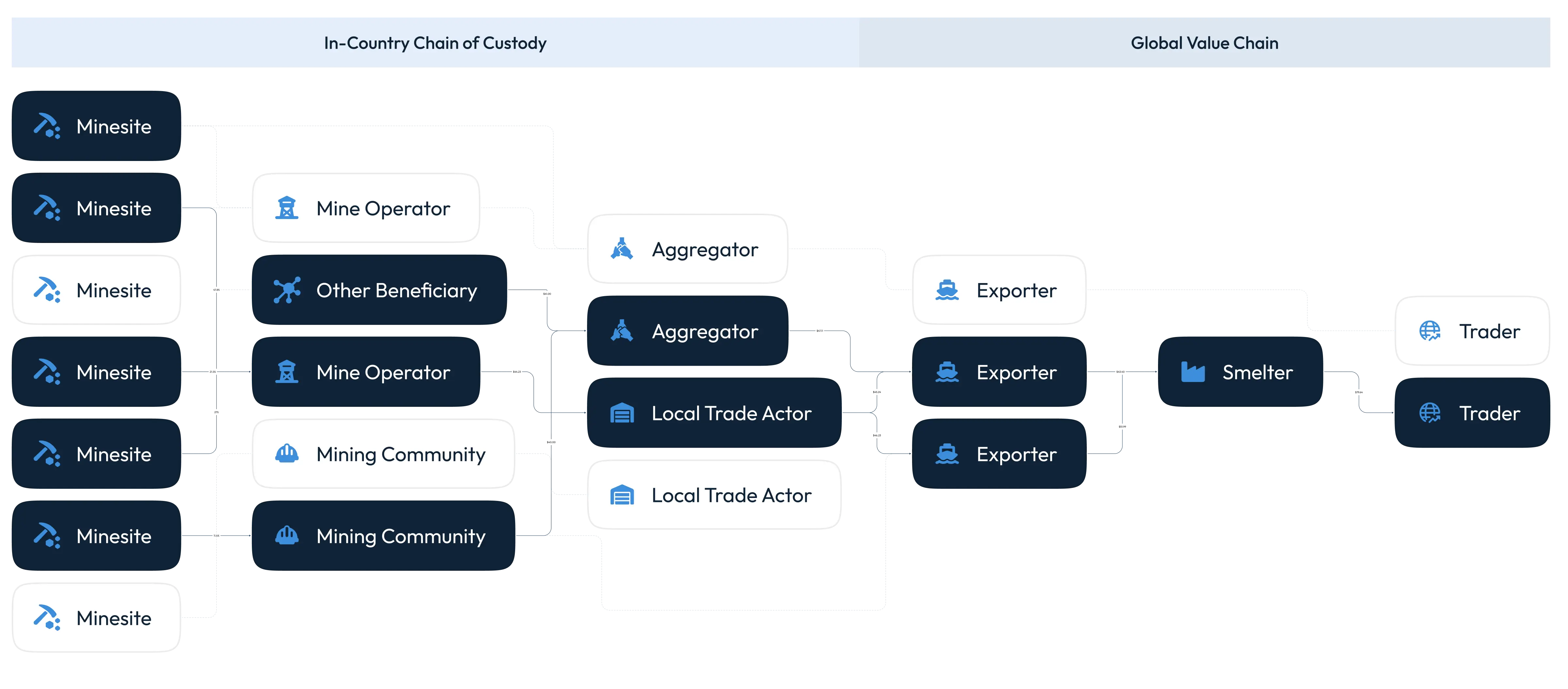
Example of upstream supply chain, % of minerals sourced and price/unit sold
Example of upstream supply chain, % of minerals sourced and price/unit sold
Example of upstream supply chain, % of minerals sourced and price/unit sold
As we worked on improving supply chain transparency and users added data to the system, we noticed that we could generate a much more granular analysis on supply chain actors. Additionally, the location risk data we were gathering provided us with an opportunity to highlight information on supply chains much more clearly than we thought possible.
As we worked on improving supply chain transparency and users added data to the system, we noticed that we could generate a much more granular analysis on supply chain actors. Additionally, the location risk data we were gathering provided us with an opportunity to highlight information on supply chains much more clearly than we thought possible.
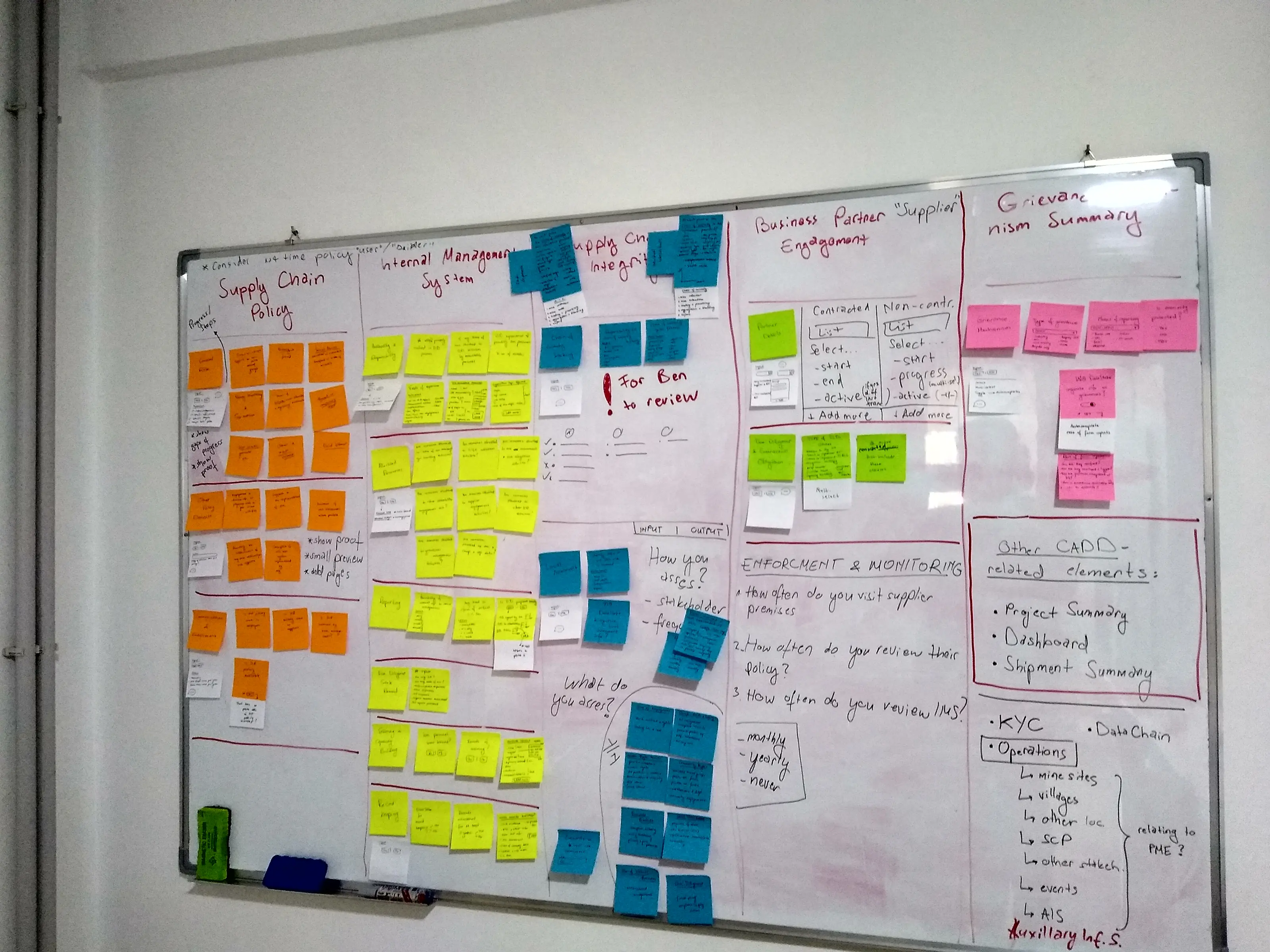
Mapping the information architecture of the due diligence data
Mapping the information architecture of the due diligence data
Mapping the information architecture of the due diligence data
We created a supply chain summary which involved information on supply chain actors & locations. For each actor we had KYC & due diligence data, while for each location we had relevant risk & event data.
We created a supply chain summary which involved information on supply chain actors & locations. For each actor we had KYC & due diligence data, while for each location we had relevant risk & event data.
DEMO
DEMO
DEMO
CADD's supply chain summary for the Zahabu Safi project
CADD's supply chain summary for the Zahabu Safi project
CADD's supply chain summary for the Zahabu Safi project
Looking at PME we saw that it made sense to connect modules on both sides in order to increase the data pool. We could now see how each supply chain actor participated in the chain, which events, risks or mitigation measures they were involved in and what other sources were saying about them.
Looking at PME we saw that it made sense to connect modules on both sides in order to increase the data pool. We could now see how each supply chain actor participated in the chain, which events, risks or mitigation measures they were involved in and what other sources were saying about them.
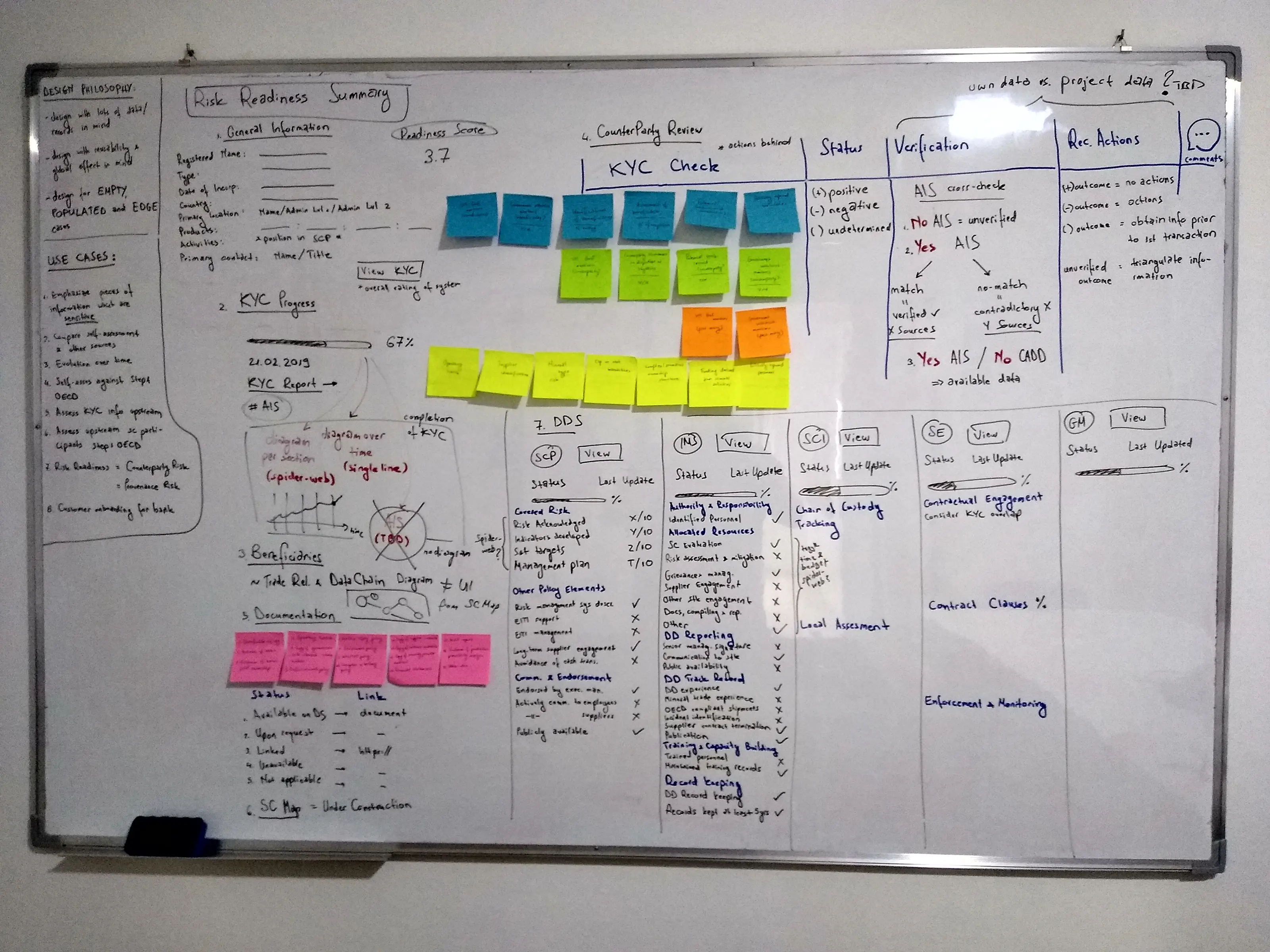
Mapping location data to a supply chain actor's profile
Mapping location data to a supply chain actor's profile
Mapping location data to a supply chain actor's profile
DEMO
DEMO
DEMO
Location risk data from the perspective of a CADD user
Location risk data from the perspective of a CADD user
Location risk data from the perspective of a CADD user
CADD was developed with the help of the European Partnership for Responsible Minerals (EPRM) in compliance with OECD guidelines. We also managed to secure a small grant from Ocean Protocol.
CADD was developed with the help of the European Partnership for Responsible Minerals (EPRM) in compliance with OECD guidelines. We also managed to secure a small grant from Ocean Protocol.
DEMO
DEMO
DEMO
An information source's data, as self-reported by the source, the current, logged-in user and another supply chain actor
An information source's data, as self-reported by the source, the current, logged-in user and another supply chain actor
An information source's data, as self-reported by the source, the current, logged-in user and another supply chain actor
Product-market-fit (PMF) through a proof-of-concept for the Alliance for Responsible Mining (ARM)
Product-market-fit (PMF) through a proof-of-concept for the Alliance for Responsible Mining (ARM)
ARM asked Datastake to built an internal application they could use to monitor the evaluation of artisanal & small-scale mines (ASMs). ASMs supply chains are often informal, unregulated, and prone to illicit activities. About 15% of global gold production in 2011 or 400 tons are supplied by ASMs (percentage higher in some countries in Africa and LAC).
ARM asked Datastake to built an internal application they could use to monitor the evaluation of artisanal & small-scale mines (ASMs). ASMs supply chains are often informal, unregulated, and prone to illicit activities. About 15% of global gold production in 2011 or 400 tons are supplied by ASMs (percentage higher in some countries in Africa and LAC).
ARM supports miners on the field, by developing and implementing sustainability standards tailored to the sector. They promote efficient & sustainable supply chains & the role of ASMs as legitimate actors in developing bottom-up decision making. Their well-known standards CRAFT, Fairmined and Forest Smart serve as benchmarks for the industry.
ARM supports miners on the field, by developing and implementing sustainability standards tailored to the sector. They promote efficient & sustainable supply chains & the role of ASMs as legitimate actors in developing bottom-up decision making. Their well-known standards CRAFT, Fairmined and Forest Smart serve as benchmarks for the industry.
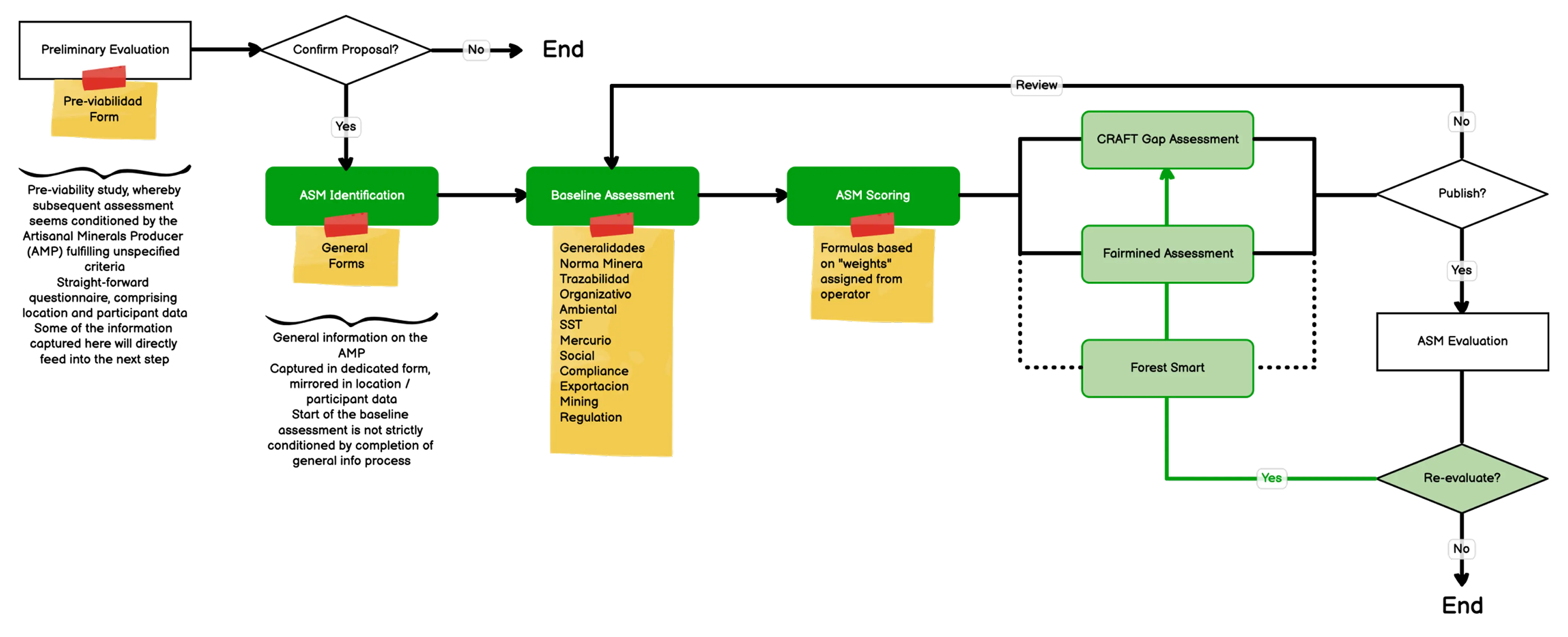
How ARM team evaluates ASMs in the field
How ARM team evaluates ASMs in the field
How ARM team evaluates ASMs in the field
This was an excellent opportunity to improve on the current state of the interface and experience of the Datastake platform since this would be a standalone solution built on top of the DataStake architecture. With the team’s approval, I set out to work on a solution for ARM and a proof-of-concept for what Datastake could be.
This was an excellent opportunity to improve on the current state of the interface and experience of the Datastake platform since this would be a standalone solution built on top of the DataStake architecture. With the team’s approval, I set out to work on a solution for ARM and a proof-of-concept for what Datastake could be.
DEMO
DEMO
DEMO
Demo of the ASMPA submitted for development
Demo of the ASMPA submitted for development
Demo of the ASMPA submitted for development
The result of our collaboration with ARM was the ASM Progress App. It won the Artisanal Mining Grand Challenge: The Amazon, organized by Conservation X Labs. They were the prize winners of 50,000$ while development continues further. Below is a walkthrough from one of ARM's key team members who made the solution possible.
The result of our collaboration with ARM was the ASM Progress App. It won the Artisanal Mining Grand Challenge: The Amazon, organized by Conservation X Labs. They were the prize winners of 50,000$ while development continues further. Below is a walkthrough from one of ARM's key team members who made the solution possible.
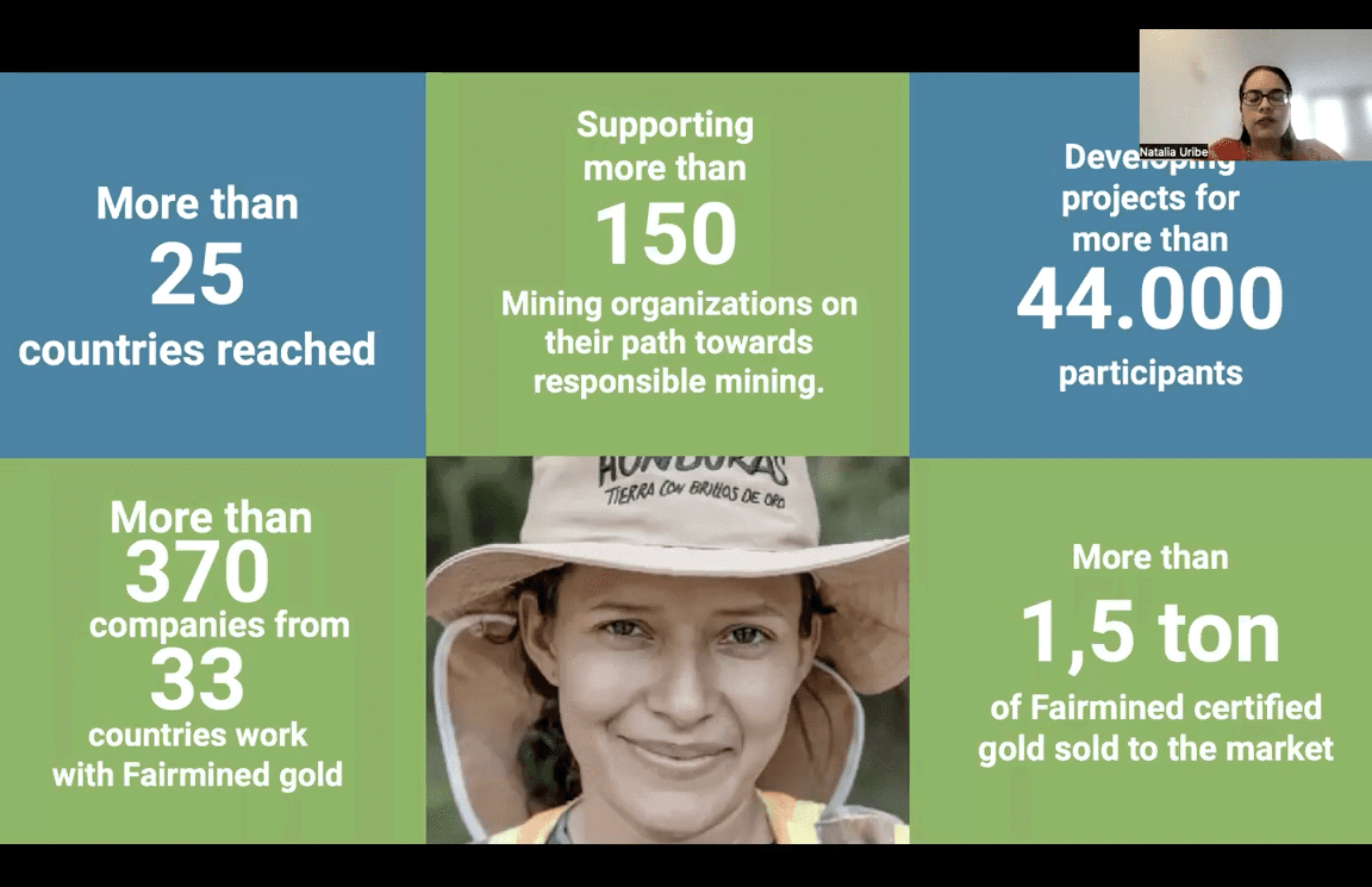
Webinar: ASM Progress App - 2022
https://www.youtube.com/watch?v=t6okOzJ_PnA&t=1537s
— Natalia Uribe, Standards and Certification at ARM
Through this project we understood something valuable for our product; we can bridge the information gap and the traction problem by offering tailored solutions to organisations leveraging the Datastake architecture. They get a white-label software with their custom logic while Datastake gets relevant supply chain data through the shared architecture. In case organisations decide to join the platform and interact with other actors, their profile is already populated in the system, similar to a claim-your-business model.
Through this project we understood something valuable for our product; we can bridge the information gap and the traction problem by offering tailored solutions to organisations leveraging the Datastake architecture. They get a white-label software with their custom logic while Datastake gets relevant supply chain data through the shared architecture. In case organisations decide to join the platform and interact with other actors, their profile is already populated in the system, similar to a claim-your-business model.
A fresh look for a new outlook
A fresh look for a new outlook
With this new direction in our horizon, the founder decided it was time for a fresh look to reflect the changes about to happen. I was tasked to create a new logo and in the process think of how to expand the brand in order to increase recognition.
With this new direction in our horizon, the founder decided it was time for a fresh look to reflect the changes about to happen. I was tasked to create a new logo and in the process think of how to expand the brand in order to increase recognition.
I started by looking at the typeface currently in use and the color palette. One of the main things that was bugging me working with the interface was the lack of a “Regular” weight. It made a few form inputs and body text choices frustrating. The original palette features a bright blue, and some lighter shades of black. A gray was used in the logo as well as other areas of the interface, including inputs and layout.
I started by looking at the typeface currently in use and the color palette. One of the main things that was bugging me working with the interface was the lack of a “Regular” weight. It made a few form inputs and body text choices frustrating. The original palette features a bright blue, and some lighter shades of black. A gray was used in the logo as well as other areas of the interface, including inputs and layout.
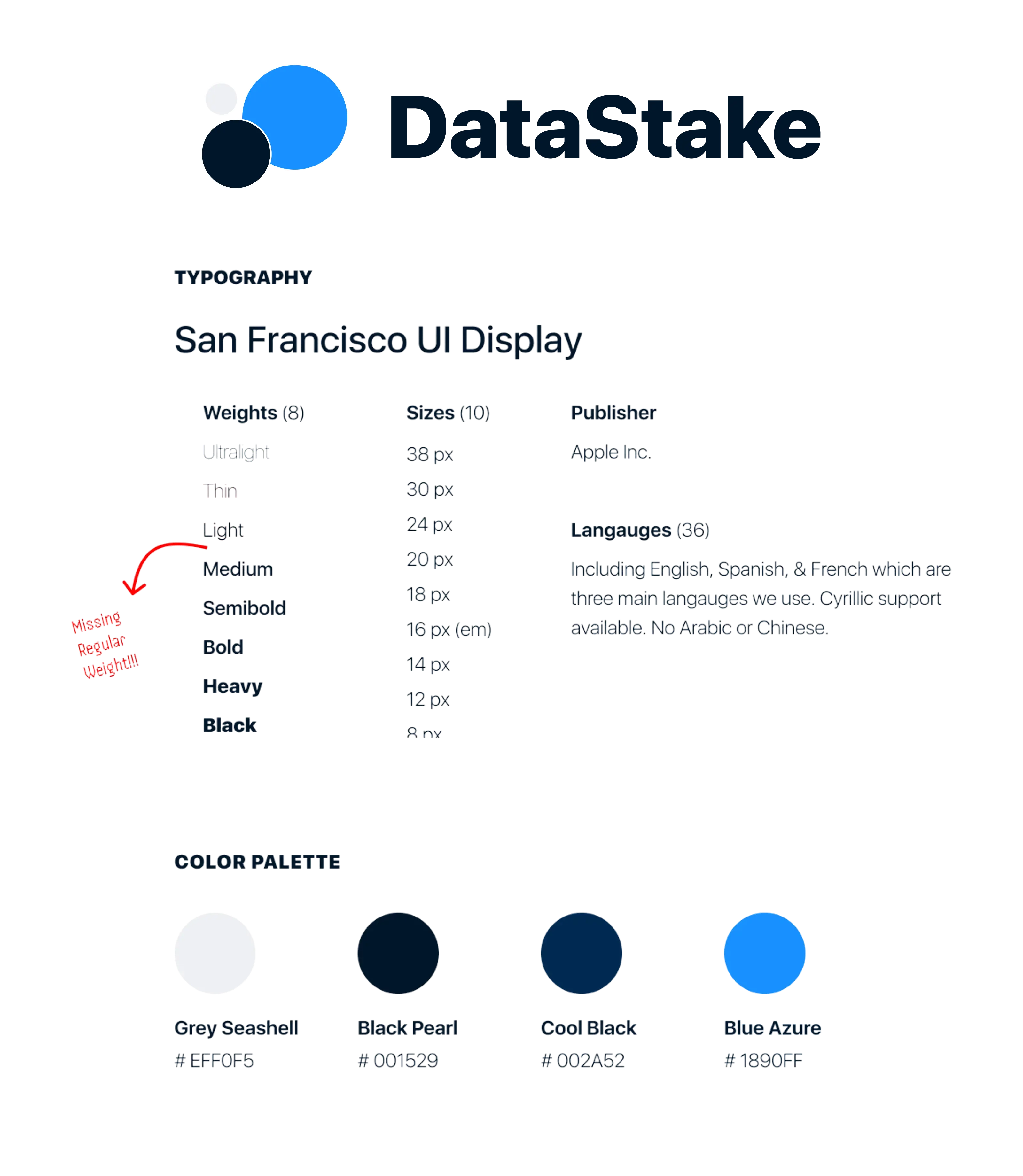
Starting brand primitives for Datastake
Starting brand primitives for Datastake
Starting brand primitives for Datastake
There were two motifs Datastake wanted to represent: data ownership and stake in the narrative. The original one did not quite convey either, although it did hint at a cluster of sorts.
There were two motifs Datastake wanted to represent: data ownership and stake in the narrative. The original one did not quite convey either, although it did hint at a cluster of sorts.
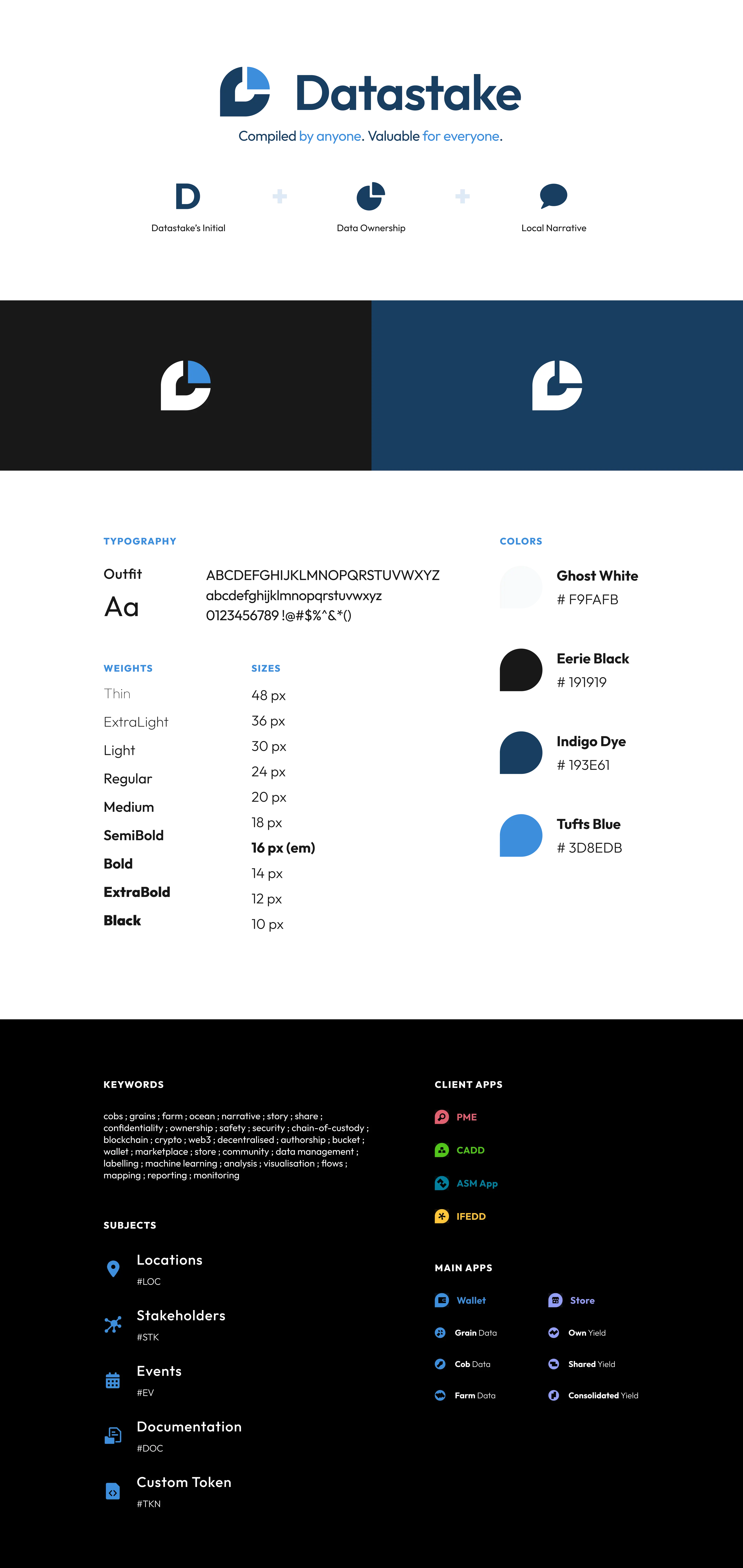
Reworked logo and primitives for Datastake
Reworked logo and primitives for Datastake
Reworked logo and primitives for Datastake
Since we didn't have a landing page, I worked on designing one that would match our new direction and vision. The page's main goal was to create a buzz about Datastake’s products and initiatives. Up to this point, the founders and consultants had worked through word-of-mouth, presentations, and Discord to share their framework and vision.
Since we didn't have a landing page, I worked on designing one that would match our new direction and vision. The page's main goal was to create a buzz about Datastake’s products and initiatives. Up to this point, the founders and consultants had worked through word-of-mouth, presentations, and Discord to share their framework and vision.
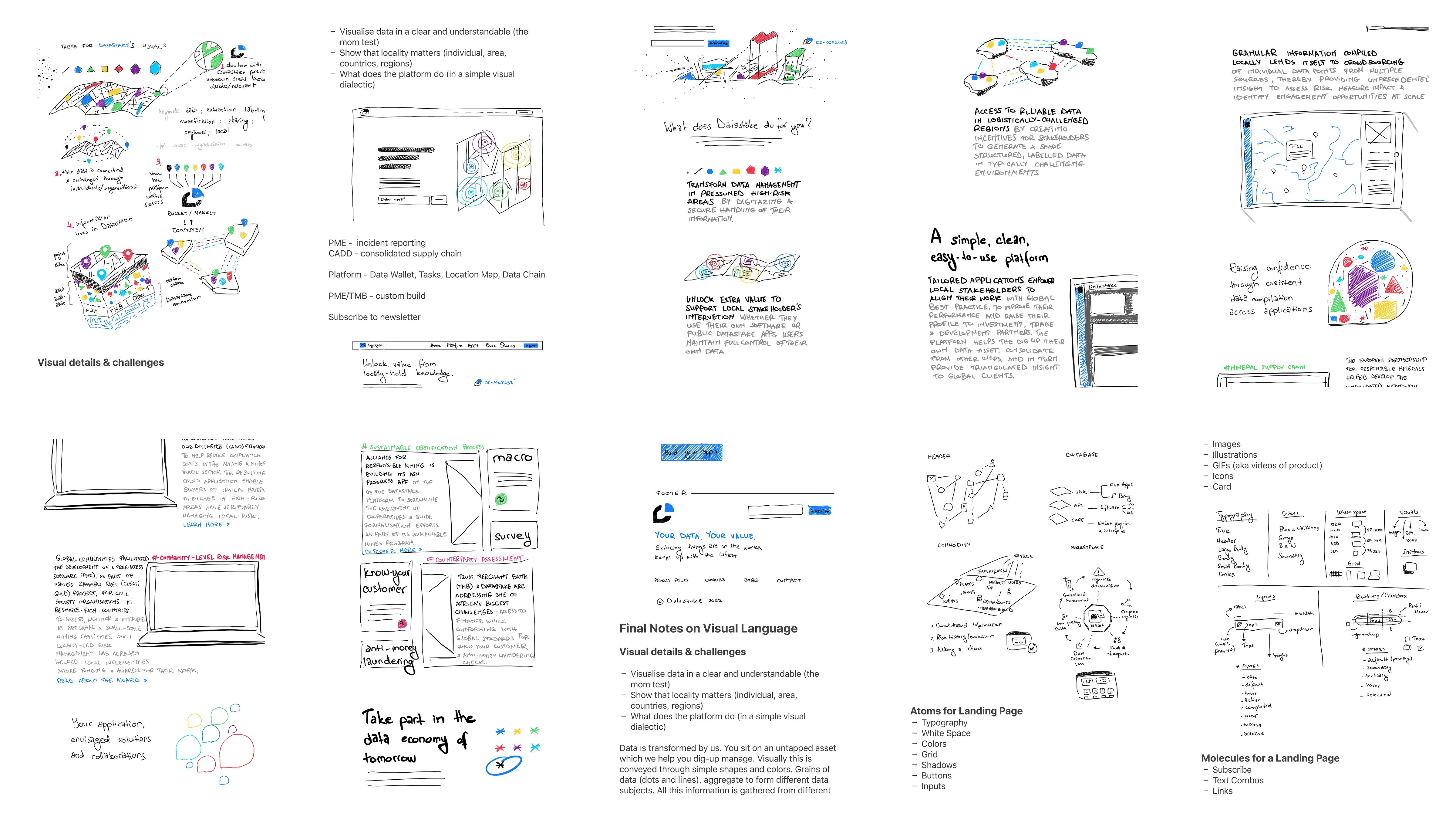
Procreate sketches for the landing page illustrations
Procreate sketches for the landing page illustrations
Procreate sketches for the landing page illustrations
We build the content and copy in parallel, working iteratively until we found what we liked. I decided to create the illustrations on my own, which were well-received by our users but in hindsight should have been executed better. Either I should have taken more time to polish them or we should have hired a professional to wrap them up.
We build the content and copy in parallel, working iteratively until we found what we liked. I decided to create the illustrations on my own, which were well-received by our users but in hindsight should have been executed better. Either I should have taken more time to polish them or we should have hired a professional to wrap them up.
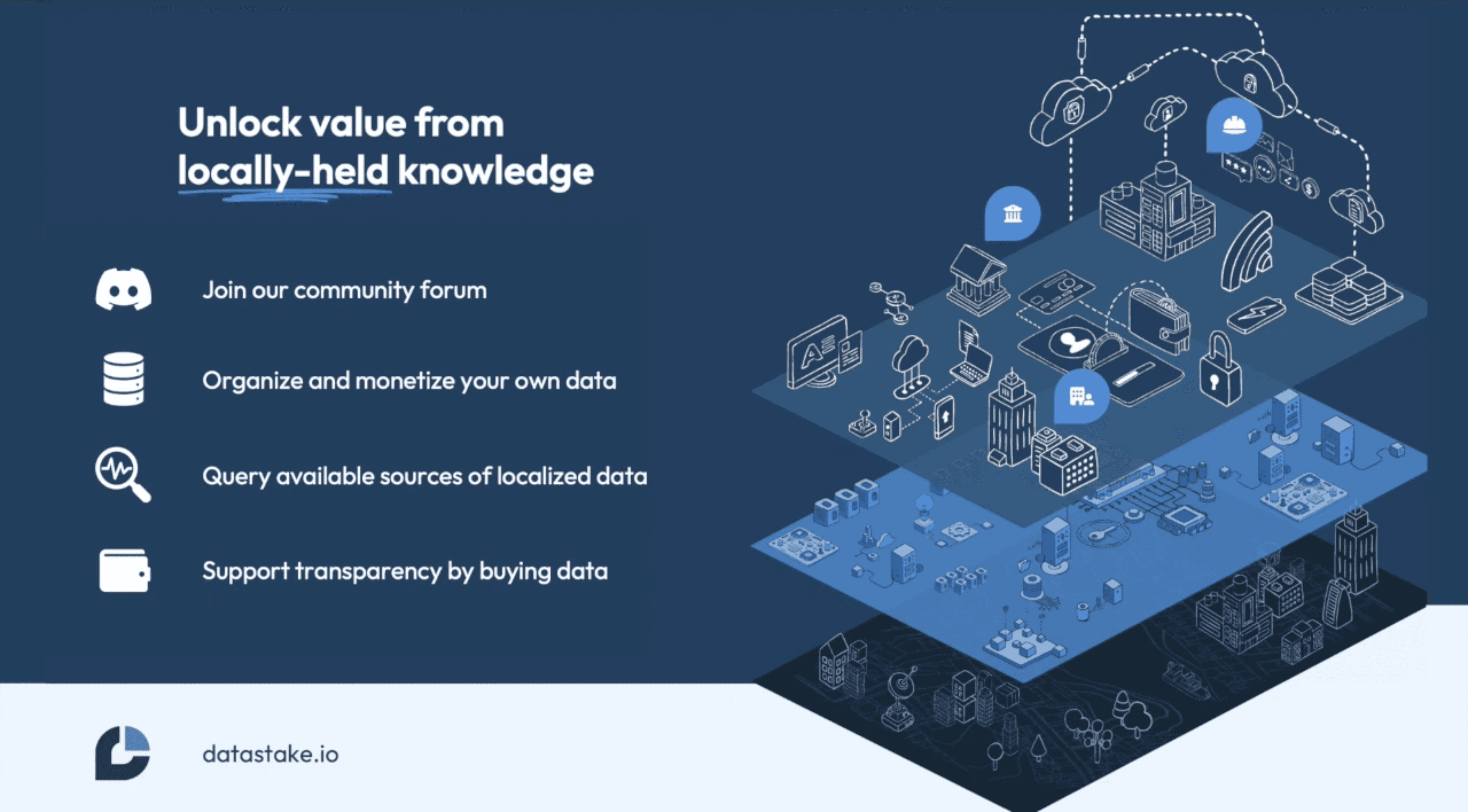
Datastake
We build applications for local businesses and NGOs to digitise and securely handle their information, improve their performance and raise their profile.
https://datastake.io/
Risk and compliance under a new umbrella, the Mining & Mineral Trade App (MMT) is born
Risk and compliance under a new umbrella, the Mining & Mineral Trade App (MMT) is born
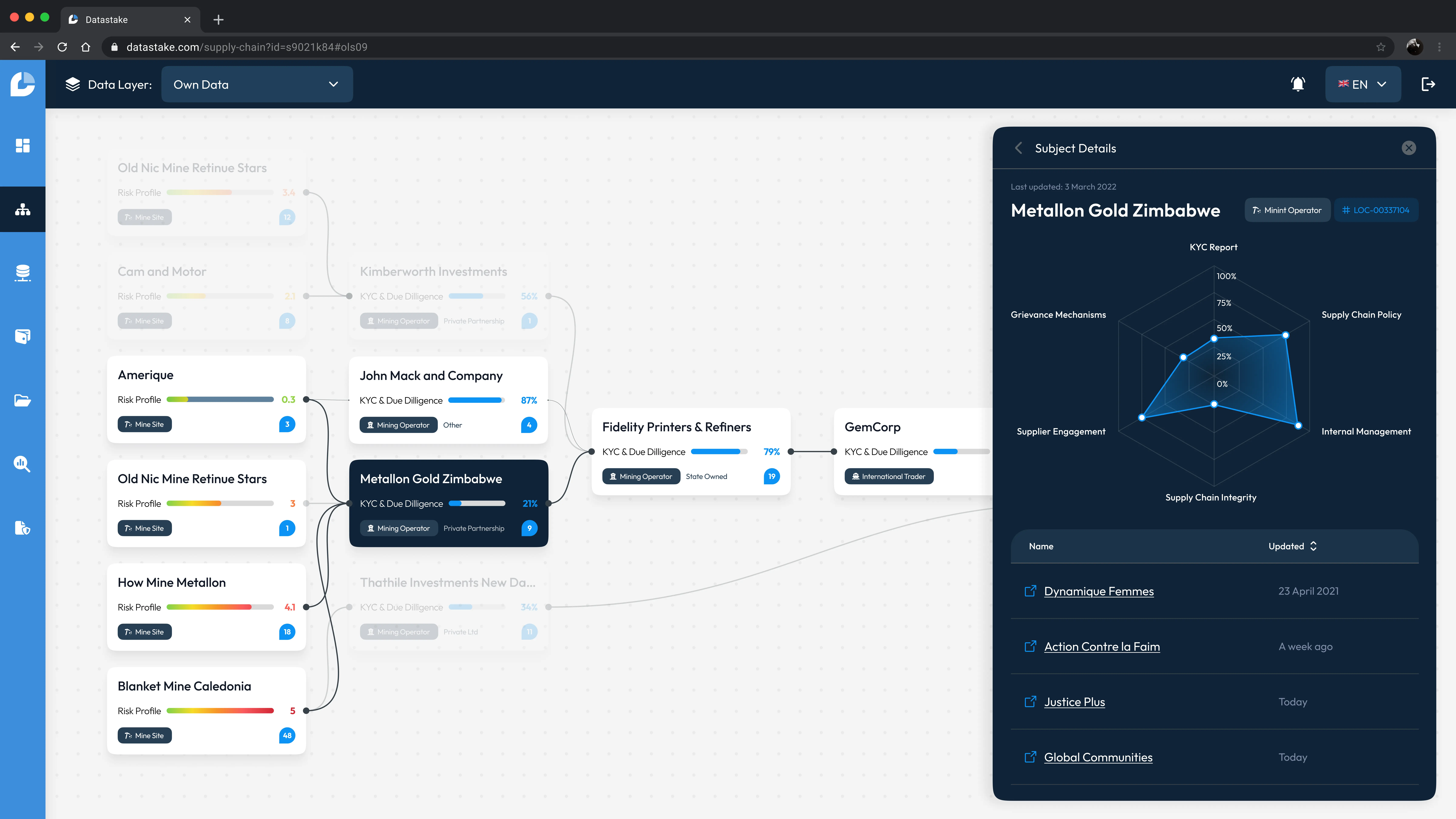
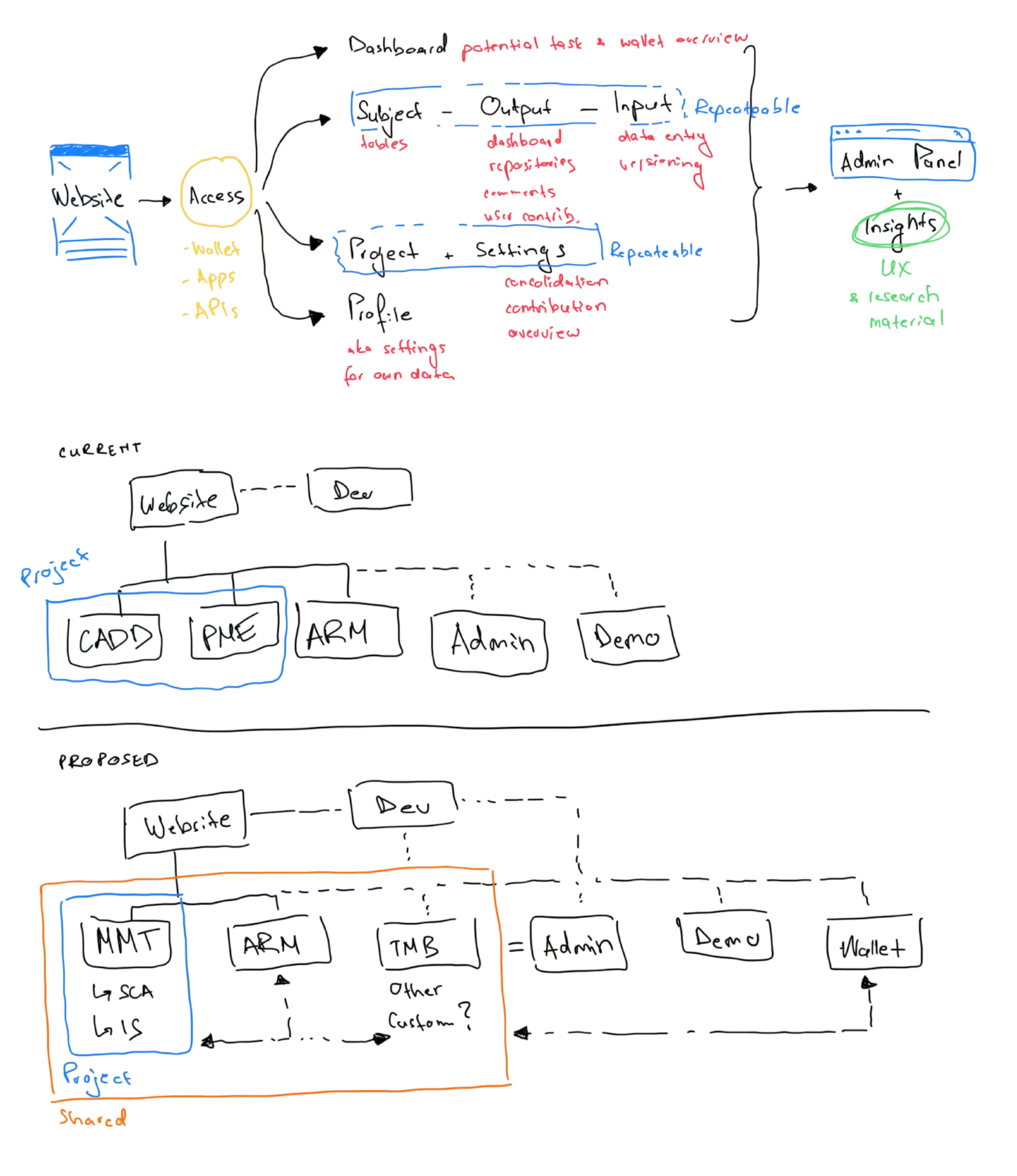
The key entities in both PME & CADD are locations and supply chain actors. In MMT we hypothesized that it would be easier and more engaging to use the location map and the node-based UI to interact with the system. Each item on the map and node was a nucleus of information and the challenge was visualising that in a concise and understandable manner.
The key entities in both PME & CADD are locations and supply chain actors. In MMT we hypothesized that it would be easier and more engaging to use the location map and the node-based UI to interact with the system. Each item on the map and node was a nucleus of information and the challenge was visualising that in a concise and understandable manner.
Reworked logo and primitives for Datastake
Reworked logo and primitives for Datastake
Reworked logo and primitives for Datastake
Before leaving, I was tasked with proposing a new interface for the MMT platform. A lot of the changes we wanted to make over my time at Datastake, both regarding the experience and interface, were tied to the current architecture, limited resources and the 100s of clients actively using the the apps. Any disruption in service would risk serious impact on the bottom line. So while we couldn't directly implement these changes, we had a potential PMF through ARM and another client in the pipeline, the Congolese bank, Trust Merchant Bank.
Before leaving, I was tasked with proposing a new interface for the MMT platform. A lot of the changes we wanted to make over my time at Datastake, both regarding the experience and interface, were tied to the current architecture, limited resources and the 100s of clients actively using the the apps. Any disruption in service would risk serious impact on the bottom line. So while we couldn't directly implement these changes, we had a potential PMF through ARM and another client in the pipeline, the Congolese bank, Trust Merchant Bank.
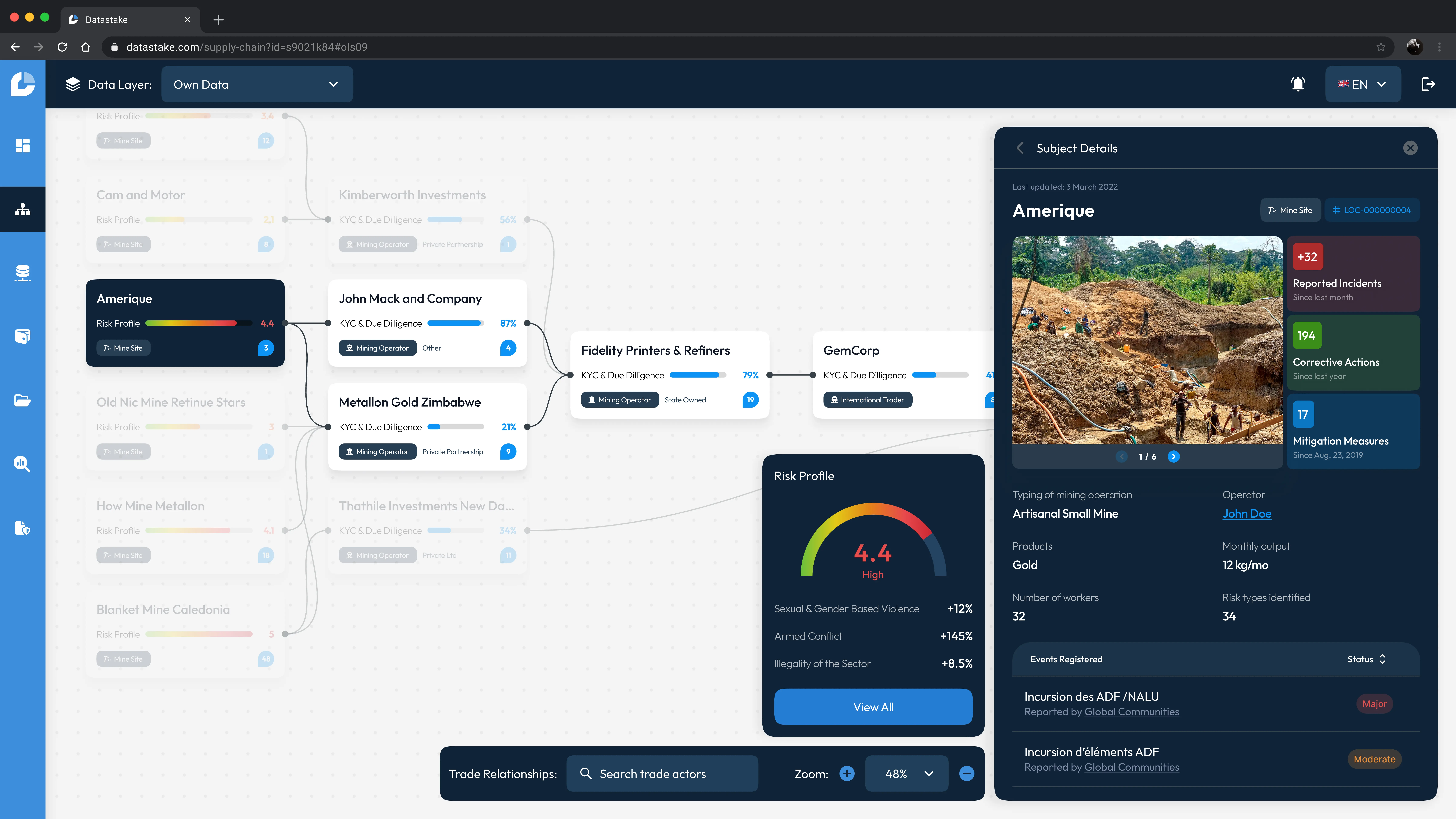
Location details in node-based UI
Location details in node-based UI
Location details in node-based UI
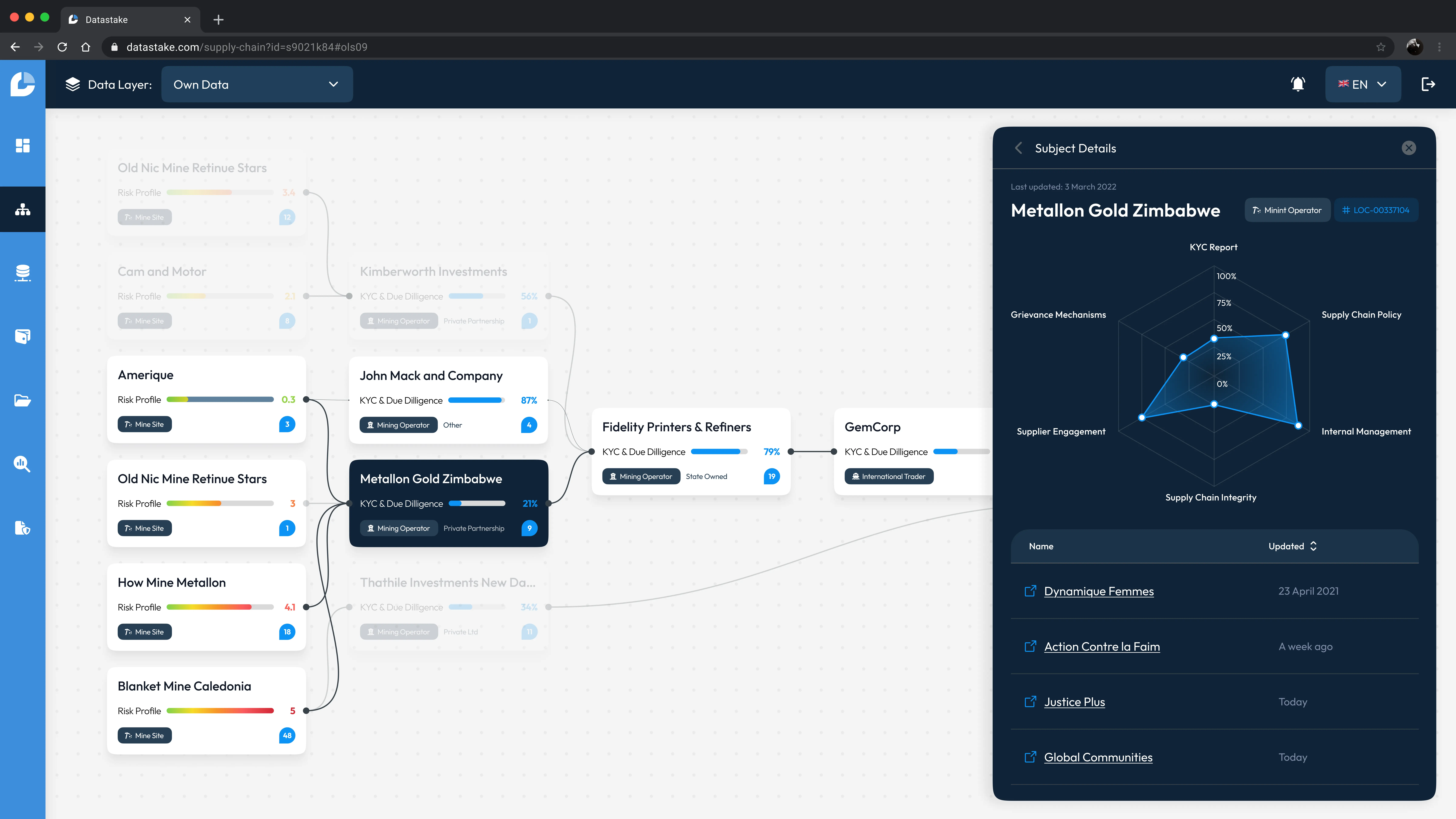
Supply chain actor details in node-based UI
Supply chain actor details in node-based UI
Supply chain actor details in node-based UI
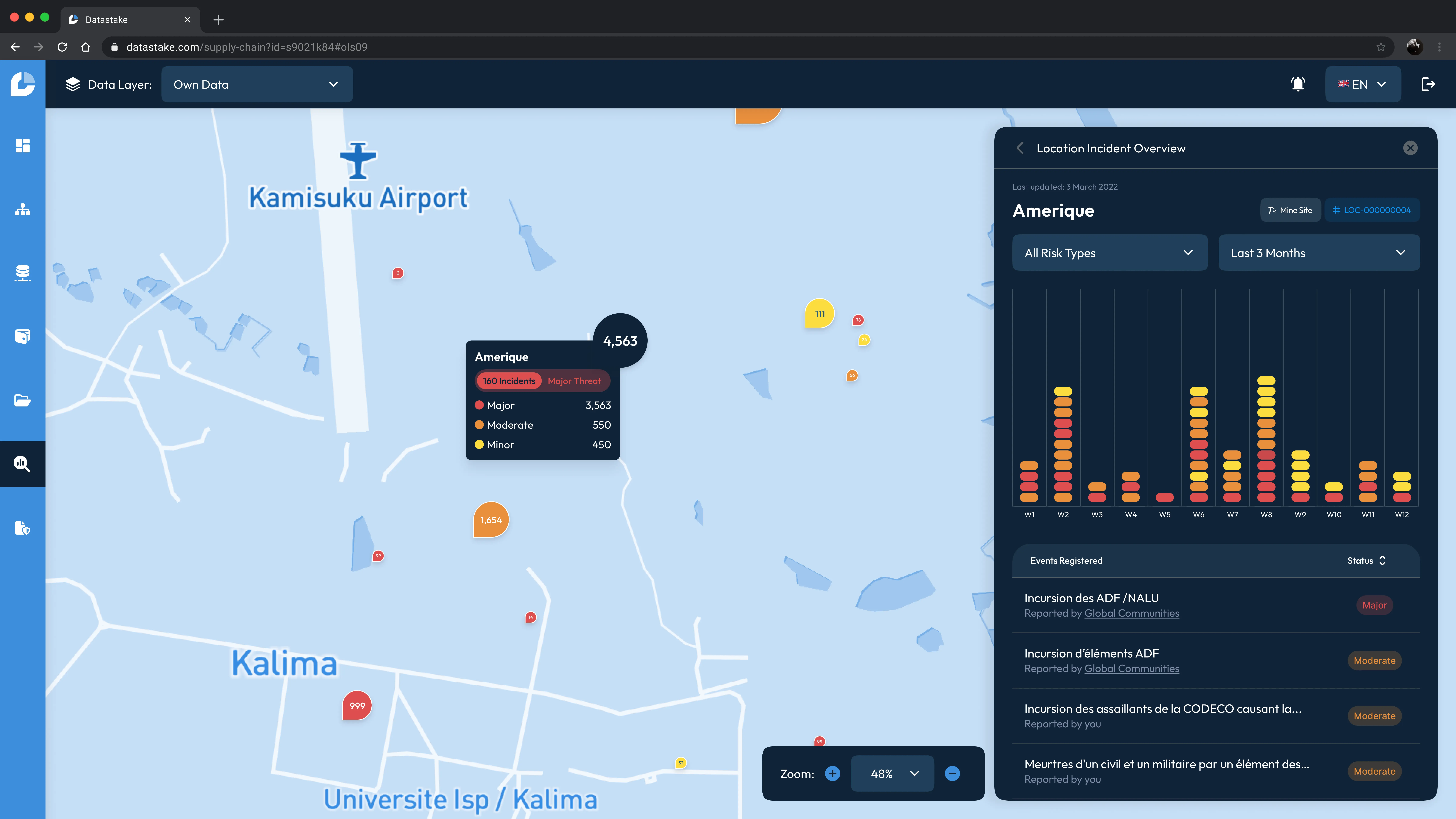
Location incident overview
Location incident overview
Location incident overview
A fresh look for a new outlook
During my time, we managed to add 19 organisations and 22 individuals across both apps. We identified, logged and addressed several issues related to the experience and usage of the app, while the interface was improved at a slower pace. The ASM Progress App allowed us to push the product boundaries, help us think beyond our initial value proposition and establish PMF.
MMT was the culmination of our shared efforts. Datatake has continued expanding and improving their value proposition, most recently collaborating with Straatos to create a digital infrastructure for environmental and carbon projects.